Definitions

What is a country estate or manor house?
In Gelderland’s Arcadia, more than a hundred country estates and country retreats were established, many of which still exist (in part). The terms ‘country estate’ and ‘country retreat’ are often used interchangeably. There is a difference.
Country estate - for entertainment, recreation and a break from the city
A ‘buitenplaats’ is, by definition, a country house (in addition to a city home), which was not originally intended as a permanent residence but was used for entertainment, recreation and as a retreat from the city. Although country retreats have been a familiar phenomenon since the sixteenth century, the term ‘buitenplaats’ dates from the early eighteenth century.
In the *Nederlandsche Spectator* of 1754, they wrote: “What was country life like in the past? Those who wished to rise a little higher in society and stand out more had a ‘hofsteede’ – that is, a manor house near the home of the farmer who leased the land and looked after the orchard. People would travel there in a large carriage and, in summer, were elegantly accommodated in the manor house. Over the past fifty years, that way of life has changed so much that even the name has not only fallen into disuse but has come to be regarded as contemptible; and anyone who now spoke of going to his country estate and giving his invited guests a faint idea of it would be considered very old-fashioned and bourgeois. It must now be called a country estate. The land surrounding it must be laid out with avenues, terraces, spruce forests and game reserves; its prestige must consist solely of how many acres one has planted without any profit.”
Country estate - practicality takes precedence
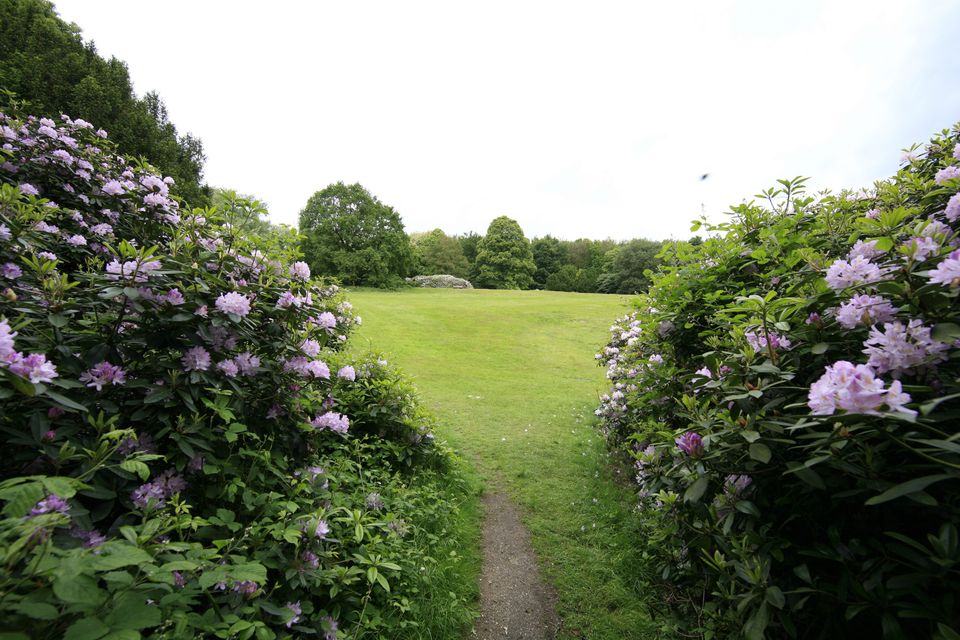
An estate is a contiguous area of land with scenic and/or cultural-historical value and an economic function, such as agriculture, housing, work or recreation. It is characterised by the integrated management of a combination of natural, woodland, agricultural, water and/or park elements, possibly including buildings. There are also estates without any buildings, such as so-called ‘reclamation estates’ which served as investments, or estates whose main building has been removed in the past (for example, through demolition, fire or war). As mentioned, a country house may form part of an estate, but the reverse is not possible. An estate is dominated by practicality, whilst a country house is dominated by pleasure.
That is not to say, however, that all estates were profitable; most were simply not large enough for that. Furthermore, the land capital – or the value of an estate – was (and is) not constant. One example of this is the Zypendaal estate (covering approximately 135 hectares), which was established in the seventeenth century. Although the estate generated income from timber production and rent, this was not sufficient to build a new country house and new gardens in 1762–1764, or even to maintain them. For this reason, the Brantsen family also had other sources of income, such as land elsewhere (even in Suriname) and investments, and strategically married into wealthy families.


Estates established in the Middle Ages, such as Middachten and Rosendael, covered a larger area of 1,000 hectares or more, including arable land with tenant farms, vegetable gardens and orchards, heathland with sheep pastures, floodplains with meadows, and forests for timber production and hunting. The land was an important source of income for the noble owners, but even at Middachten and Rosendael, major projects such as the renovation or extension of the castle or architectural additions to the scenic landscape were often funded from a wide range of income sources.
Sources used:
E. Storms-Smeets (ed.), Gelders Arcadië. Atlas of a Country Estate Landscape (2011, Utrecht)
M. van Bleek, E. Storms-Smeets and E. van Winden, Opportunities for Gelderland’s Arcadia (2011, Utrecht)
Gelders Genootschap and Poelmans Reesink Landscape Architects, Gelders Arcadië. Characteristics and ambitions. Arnhem, Renkum, Rheden, Rozendaal, Wageningen (2016, Arnhem)