Herberg Zuid-Ginkel and the three fallen hussars

In the early hours of Friday 10 May 1940, the German army invaded the Netherlands. After German troops had crossed the IJssel near Westervoort, they advanced via Arnhem and Ede towards the Grebbe Line, which lies to the west of Ede.
The 4th Hussar Regiment (soldiers on horseback or by bicycle) was tasked with slowing down the German advance between Arnhem and Ede, to allow time to prepare the main defences along the Grebbe Line. The hussar regiment ultimately had to attempt to withdraw behind the Grebbe Line with as few casualties as possible, where they were redeployed.
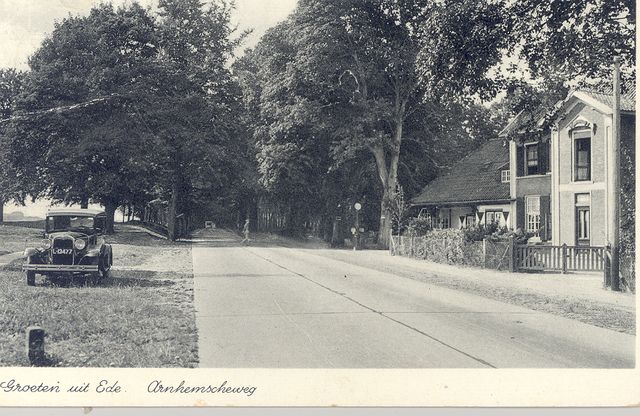
Four motorised hussars formed the regiment’s rearguard. This group was under the command of Cornet Count van Limburg Stirum. Their task was to protect the regiment’s retreat. To this end, they took up positions on the upper floor of De Herberg Zuid-Ginkel.
Suddenly…
In the early hours of Friday 10 May 1940, the German army invaded the Netherlands. After German troops had crossed the IJssel near Westervoort, they advanced via Arnhem and Ede towards the Grebbe Line, which lies to the west of Ede.
The 4th Hussar Regiment (soldiers on horseback or by bicycle) was tasked with slowing down the German advance between Arnhem and Ede, to allow time to prepare the main defences along the Grebbe Line. The hussar regiment ultimately had to attempt to withdraw behind the Grebbe Line with as few casualties as possible, where they were redeployed.
Four motorised hussars formed the regiment’s rearguard. This group was under the command of Cornet Count van Limburg Stirum. Their task was to protect the regiment’s retreat. To this end, they took up positions on the upper floor of De Herberg Zuid-Ginkel.
Suddenly, on the afternoon of Friday 10 May, a heavily armed motorised SS formation emerged from the woods on the Rijksweg 24 (now the N224), approaching from the direction of Arnhem. It was a reconnaissance unit of the SS Regiment ‘Der Führer’. Immediately, the group of Dutch hussars opened fire on the German troops with their light machine guns. The Germans turned around straight away and disappeared back into the woods.
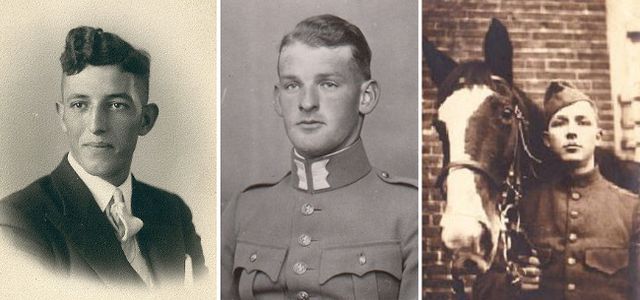
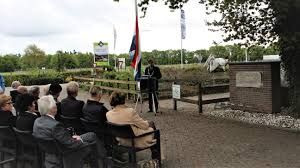
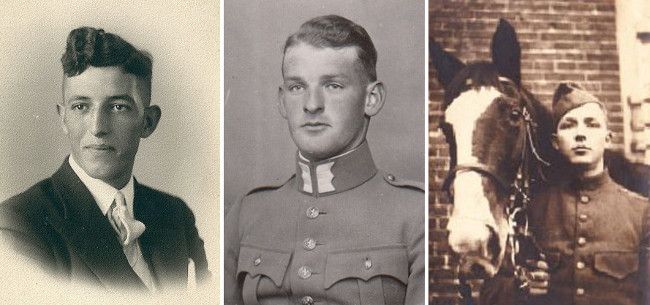
After some time, the cornet decided to withdraw as ordered. But unexpectedly, German motorcyclists came along the Wijde Veldweg, past the sheepfold, towards the inn. They had ridden to the sheepfold under the cover of the row of trees lining the sheep pasture. The cornet himself opened fire again with the light machine gun so that his men could make their escape. He ran out of ammunition, after which he was forced to surrender. He went downstairs, but was shot dead without mercy at the front door. His men, Corporal Bonkerk and Hussar Dijkers, met the same fate at the side door.
The fourth man, Hussar Kuperus, was hidden inside by innkeeper Kramer. Shortly afterwards, the area around the inn came under Dutch artillery fire. The German troops retreated towards the Planken Wambuis. This gave Hussar Kuperus the chance to escape. Dressed in civilian clothes and on a borrowed bicycle, he managed to reach his own lines via the Kreelseweg.