Oranje Nassau’s Oord (Cortenbergh or Kortenburg)

On the site of what is now Oranje Nassau’s Oord (known locally by the abbreviation ONO), there stood, until the second half of the nineteenth…
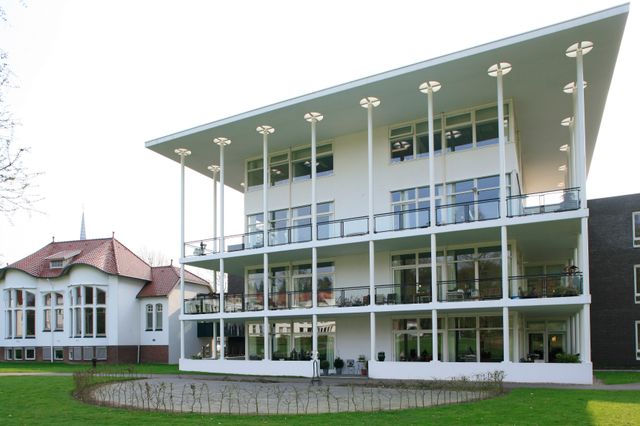
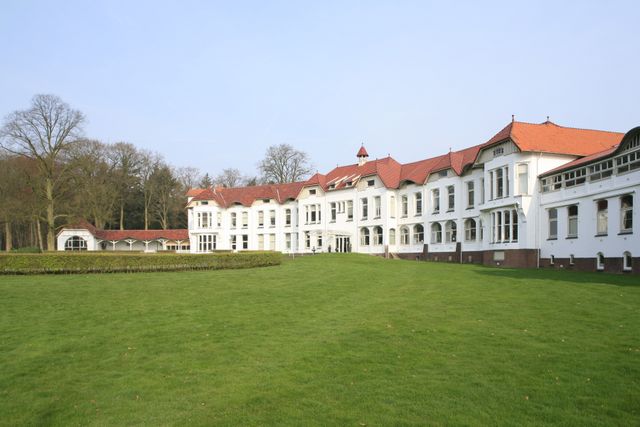
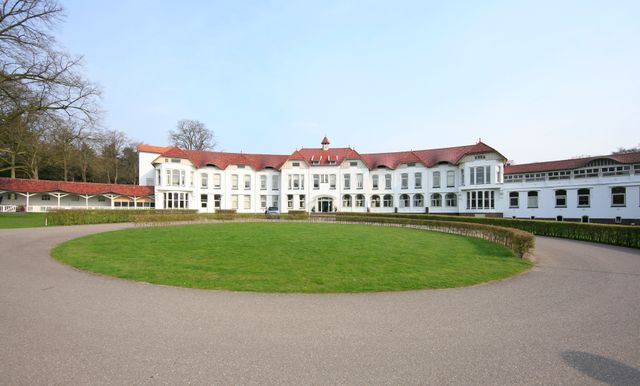
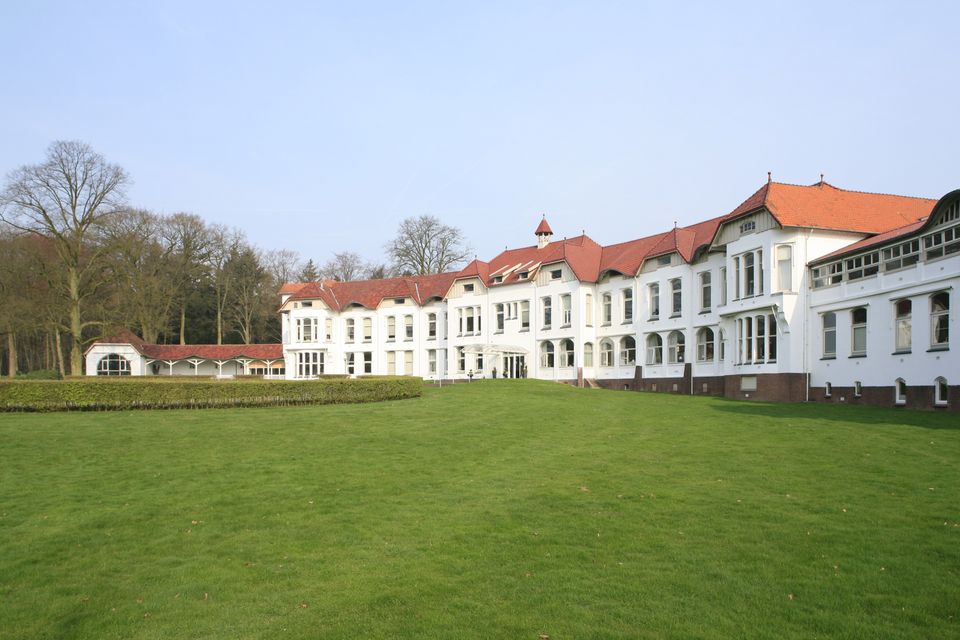
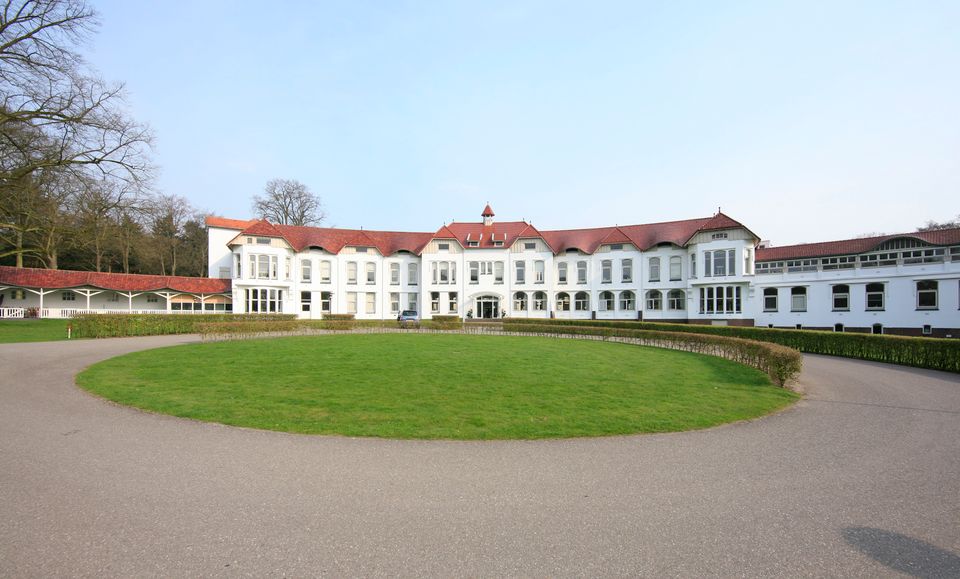
On the site of what is now Oranje Nassau’s Oord (known locally by the abbreviation ONO) stood, until the second half of the nineteenth century, the house known as Cortenbergh or Kortenburg, which dated back to the fourteenth century and was a former (separated) fiefdom of Grunsfoort. Around 1840, Kortenburg was purchased by Mr Reinhard Crommelin, who had a new country house built there in 1857 (designed by L.H. Eberson). The rebuilt country house was purchased and renovated in 1881 by King William III for his wife, Emma of Waldeck-Pyrmont. The estate was then named Oranje Nassau’s Oord. The accompanying estate covered 182 hectares. Ultimately, Emma spent only a few summers there. The design for the house and the surrounding parkland was by Louis Paul Zocher. From 1898, it served as a sanatorium for patients with lung diseases. In 1901, a large, white sanatorium building designed by the architect Eduard Cuypers was erected next to the country house. The building was given a curved shape to prevent draughts and thus create a healthier climate for the patients. During the Second World War, the country house was severely damaged and subsequently demolished. The sanatorium, which still stands, has been in use as a nursing and care home since the 1970s. The 168-hectare estate lies largely within the municipality of Wageningen, on the border with the municipality of Renkum. The former vegetable garden has been used as an organic vegetable garden since 2000. In addition to the former sanatorium building, various outbuildings have been designated as municipal monuments.
Contact
Opening hours
- Open to the public