Hemelse Berg

De Hemelse Berg has its origins in the large estate of Ter Aa. In 1728, it was referred to as a ‘heggeholt’ and was separated from Ter Aa. To…
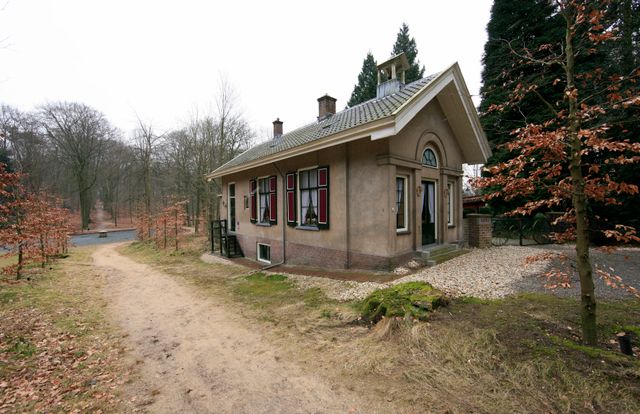
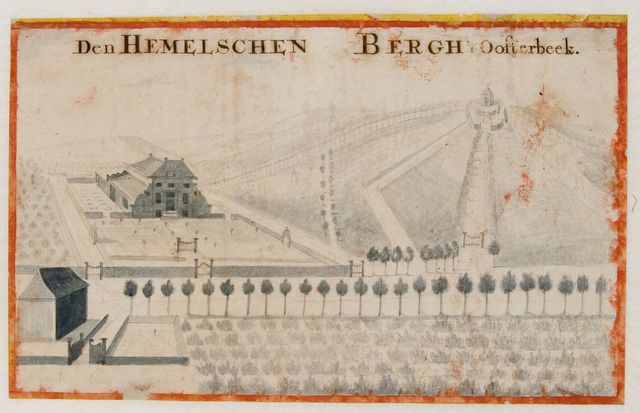
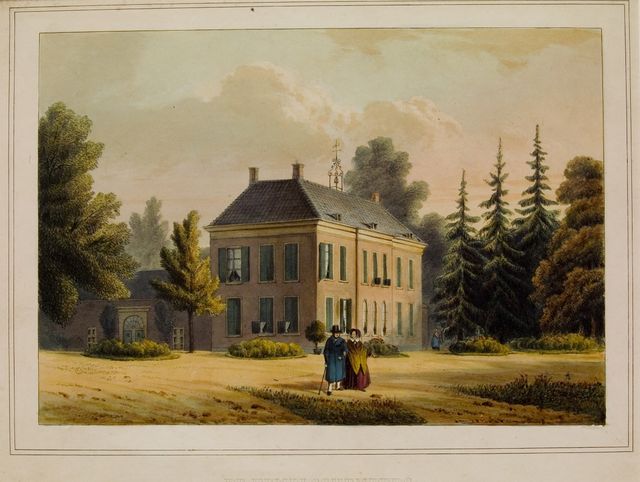
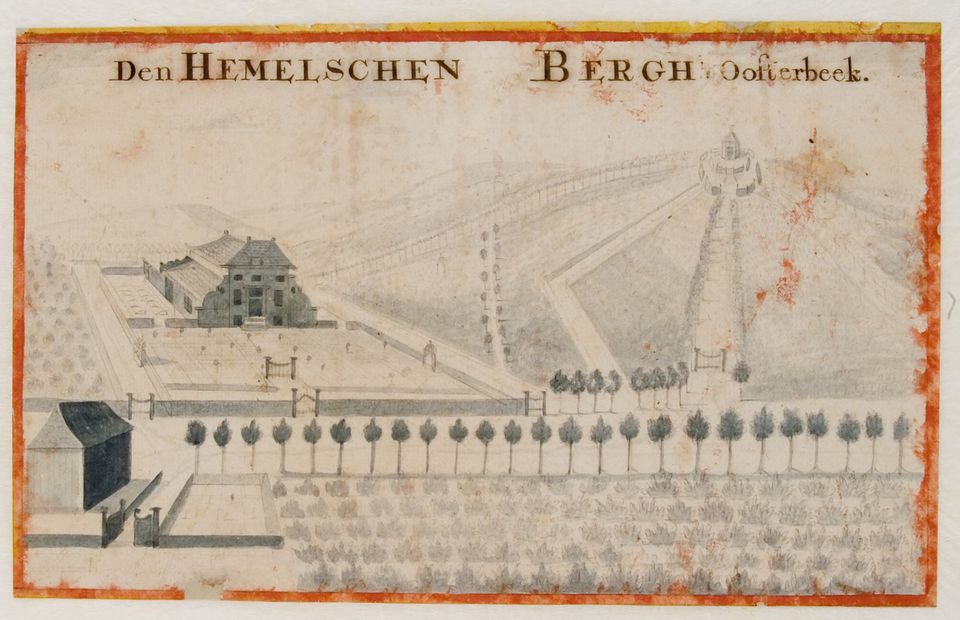
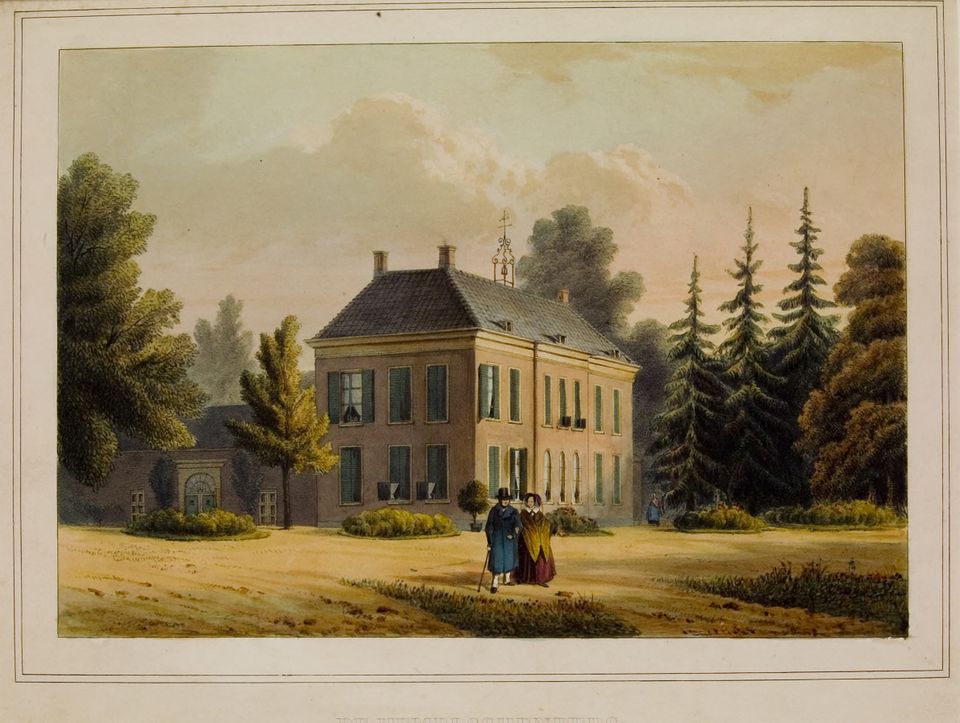
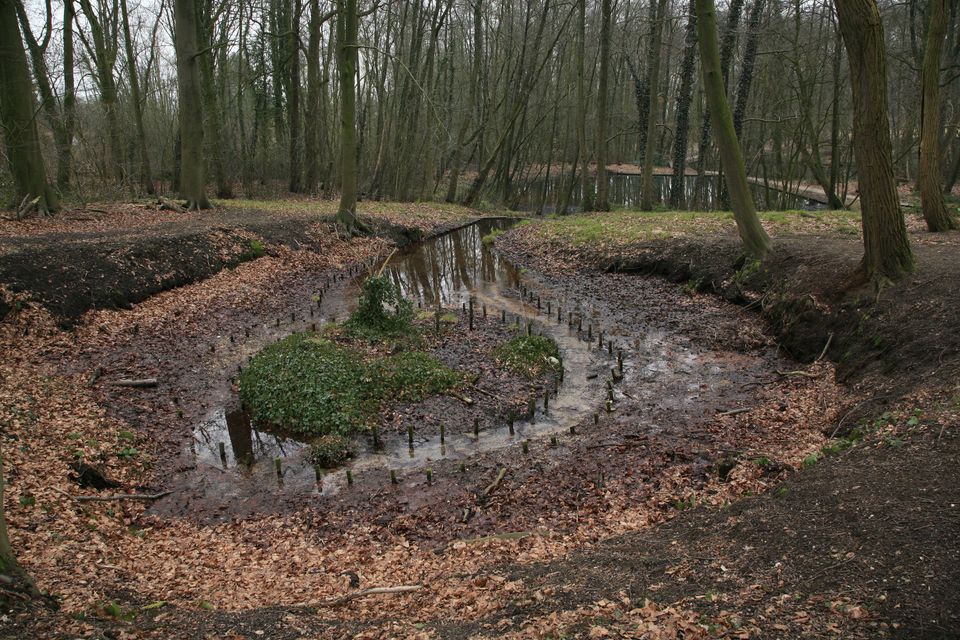
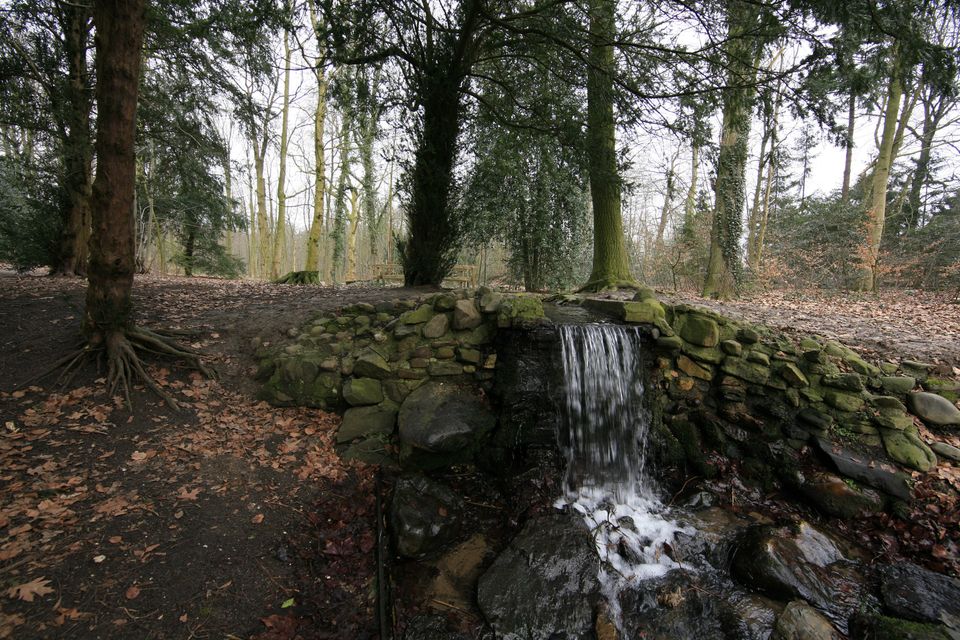
De Hemelse Berg has its origins in the large estate of Ter Aa. In 1728, it was referred to as a ‘heggeholt’ and was separated from Ter Aa. Around 1735, Abraham van der Hoop expanded it and transformed it into a country estate with a manor house, gardens, woods, ponds and a corn and paper mill. In 1807, the mayor of Arnhem, Mr D. Gaymans, became the owner. He demolished the eighteenth-century house and replaced it with a new country house. Gaymans sold it in 1821 to Mr J.A. Kallenberg van den Bosch, a man of independent means from The Hague. Between 1830 and 1841, it was owned by C.P.E. Robidé van der Aa, who commissioned the landscape architect J.D. Zocher Jr. In 1848, the estate came into the possession of Jan Kneppelhout, who had a new country house built in 1858 (designed by L.H. Eberson) and had the park redesigned between 1872 and 1876 (designed by H. Copijn). During the Second World War, the country house was severely damaged and was later demolished. Part of the site was sold in 1952 to make way for a nursing and maternity home. The orangery dating from 1860, the gardener’s cottage and the former coachman’s house have been preserved. In the nineteenth century, new small country estates were created on parts of the estate, such as Pietersberg and Transvalia.
Opening hours
- Park open to the public