Visible reminders of the Second World War
The Battle of Arnhem, fought on the banks of the Rhine in September 1944, was part of Operation Market Garden. This was the code name for a major offensive, the aim of which was to advance in one go from the already liberated Belgium into the central Netherlands and then turn towards Germany. Many towns and villages were partially destroyed, only to be rebuilt afterwards. Would you like to commemorate the Second World War? Then do visit one of the many monuments, significant sites, cemeteries or museums. Here are a few tips where you can still see the traces of the war.
John Frost Bridge & Resistance Monument
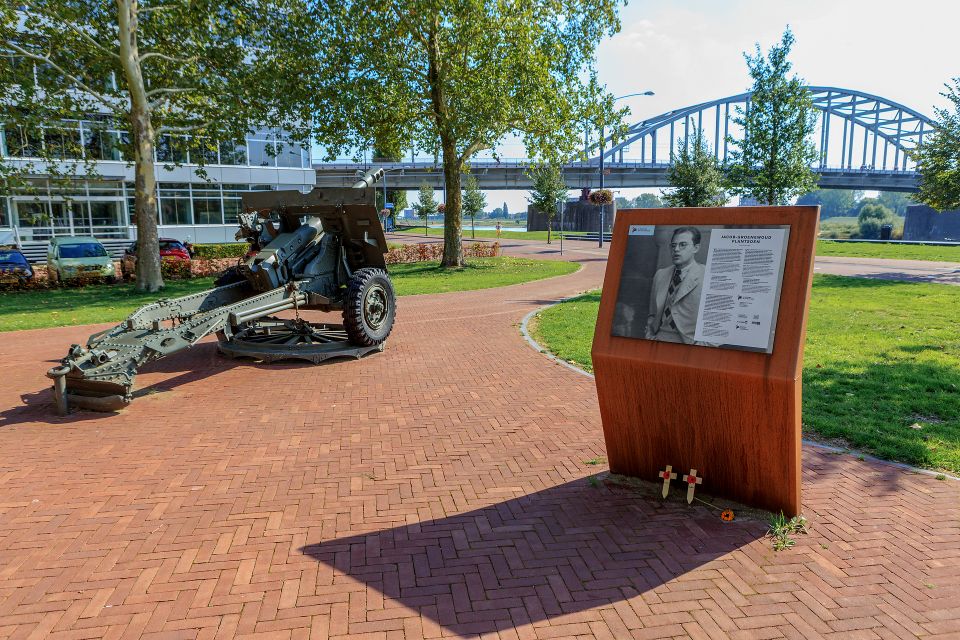
Number one without a doubt: the most important and defining location for the Battle of Arnhem. The John Frost Bridge in Arnhem is the famous ‘Bridge Too Far’. This is where, in 1944, the Allies attempted to capture the bridge from the Germans. However, the German forces were simply too overwhelming. A large part of the old town centre was destroyed. After the battle, all residents of Arnhem were ordered by the German authorities to leave the city, after which Arnhem was systematically looted by the German army. The Resistance monument on Jacob Groenewoudplantsoen is made from the rear façade of the Musis concert hall. The monument was designed by Jouke Hoogland and the poet Jos Pauw. The inscription ‘Most people remain silent; a few take action’ encapsulates the spirit of the resistance.
You can find more information about this part of the Second World War at the Airborne at the Bridge information centre. From the information centre, you have a view of the bridge.
Airborne Museum at Hartenstein
Experience the Battle of Arnhem at the impressive and contemporary Airborne Museum at Hartenstein. The museum is housed in Villa Hartenstein, which served as the British headquarters in September 1944. In the Airborne Experience, you’ll follow in the footsteps of British paratroopers and suddenly find yourself in the midst of the fierce fighting in the streets of Arnhem in 1944. Walk through the Battle of Arnhem step by step, listen to the moving stories of British, German and Polish soldiers, and meet civilians and hear their remarkable testimonies.
Further information

Hotel de Wereld
Wageningen is inextricably linked to the Second World War. It was in Wageningen that the surrender was signed on 5 May 1945. Hotel de Wereld, where this historic event took place, remains a major attraction in the city. Inside the hotel itself, you can visit the Surrender Hall. On the 5 May Square in front of it, you’ll find the National Liberation Monument. Every year on 4 and 5 May, the city provides a fitting backdrop for the commemoration and celebration of our freedom. Why not visit Wageningen on one of these days and experience the warm welcome the veterans receive during the famous parade?
More information about Hotel de Wereld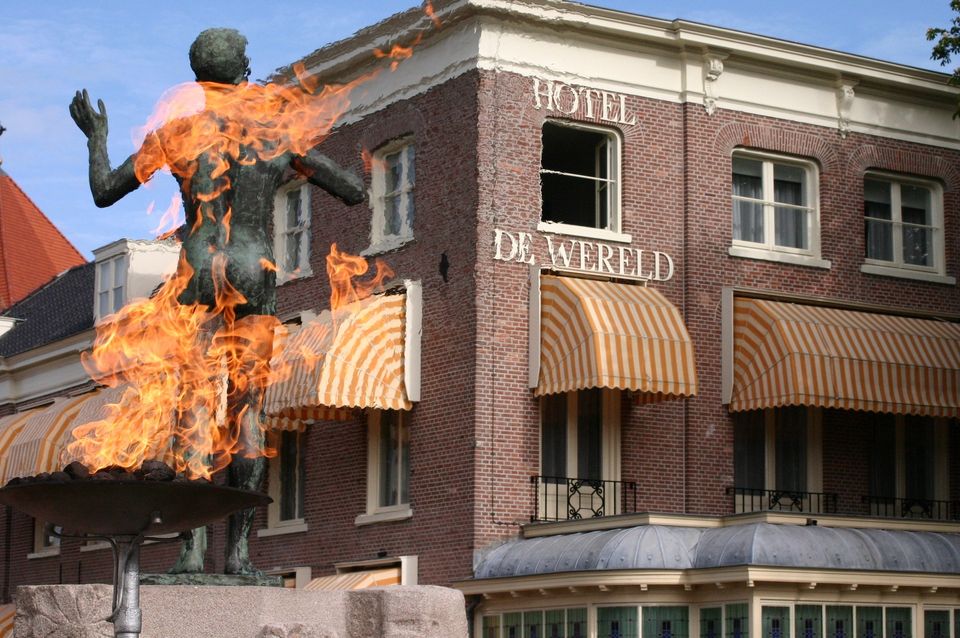
Cemetery
Airborne War Cemetery
The Airborne War Cemetery is a military cemetery situated in Oosterbeek. Buried in this cemetery of honour are 1,754 soldiers, pilots and marines who lost their lives between September 1944 and April 1945. Further information
Monuments
-
Airborne Monument
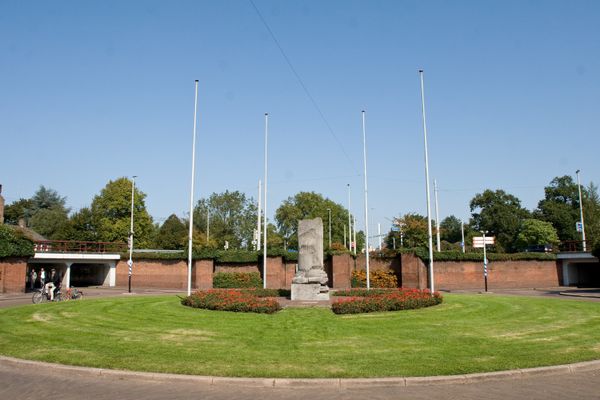
Right in the middle of Airborne Square in Arnhem (accessible only on foot or by bike) stands the Airborne Monument. This monument was unveiled on 17 September 1994 in memory of 17 September 1944. It is a war-damaged column from the former Palace of Justice and is listed as a National Monument.
-
De Naald
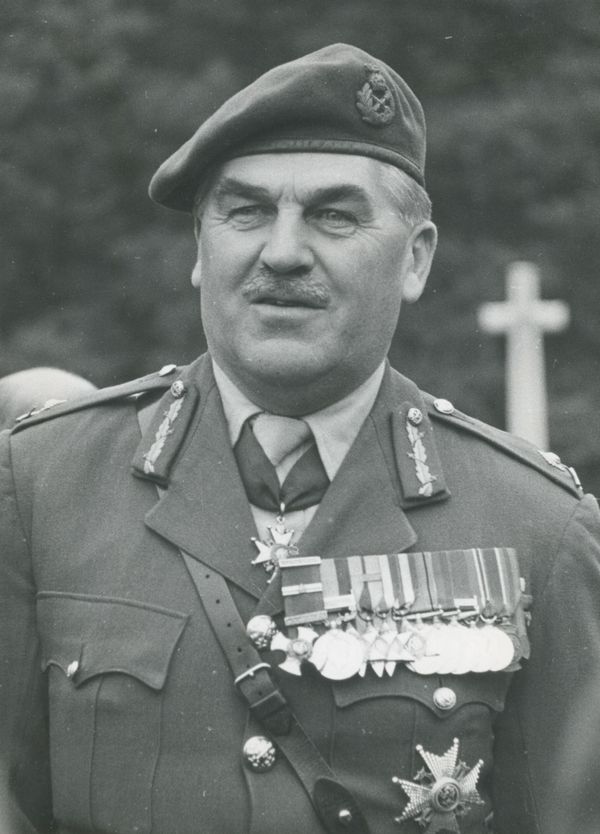
Opposite the Airborne Museum ‘Harteinstein’ in Oosterbeek, you’ll find this Airborne monument. It is a natural stone memorial column featuring a figure representing freedom. He is surrounded by civilians and soldiers. This war memorial was unveiled in 1947 by Queen Wilhelmina. The foundation stone was laid by Major-General R.E. Urquhart.
-
Wolfheze Glider Monument
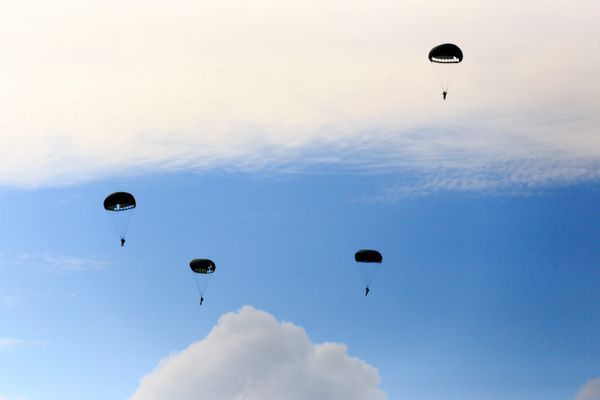
When the Allies suspected that German troops were hiding in the psychiatric hospital in Wolfheze, they bombed it on the morning of Sunday 17 September. This was followed by the landing of 134 gliders. In memory of this day, a monument in the shape of a British glider has been erected on Wolfhezerweg, near Camping Lindenhof.
Listening spots along the Liberation Route
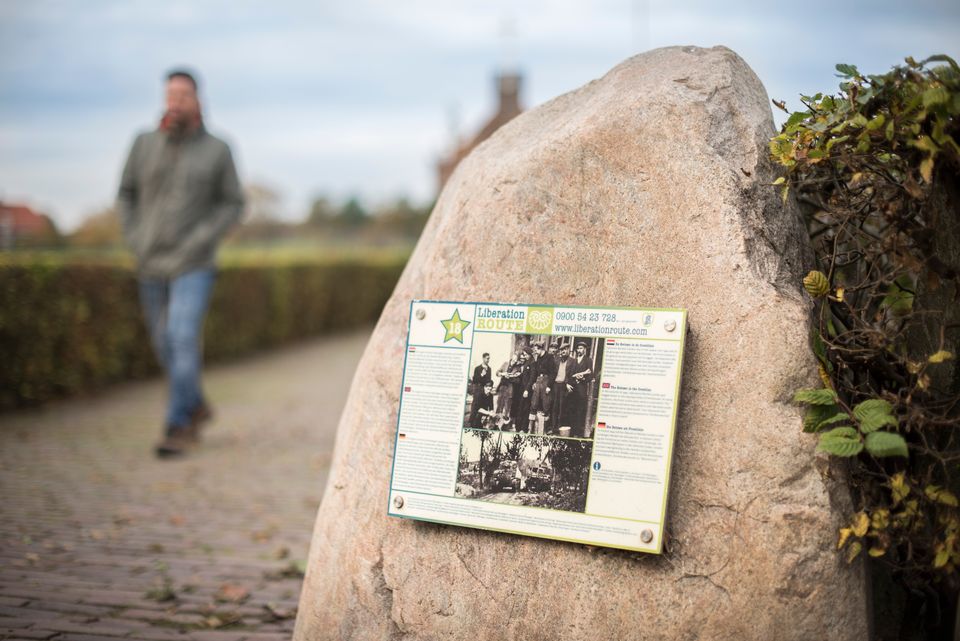
The Liberation Route is the path taken by the Allies during the final phase of the Second World War as they liberated mainland Europe. In the Arnhem region, you’ll find various listening points, places of interest and historic sites that mark this route and provide information about it. At the listening points, you can listen to a narrative recounting the events of the Second World War.
View all listening spots