
Arnhem during the Second World War: notable places & events
More than 75 years ago, in September, Arnhem fought for its freedom. It’s a fitting moment to look back on the events that took place here. Alongside the famous Battle of Arnhem (part of Operation Market Garden), which saw the British, Canadians and Poles attempt to recapture the Rhine bridge from the Germans, much more happened here.
Royal Burgers’ Zoo
Although Burgers’ Zoo was prepared for the war thanks to timely deliveries of food for the animals, the park suffered severely under the German occupation. German soldiers regularly forced their way into the park, taking parts of the food supply or attempting to use the park as a hunting ground with the aim of shooting various zoo animals.
Ultimately, the Battle of Arnhem in particular caused a great deal of damage to the zoo. Dozens of explosive devices landed in the park, destroying animal enclosures and killing animals. On 28 September 1944, an Allied shell even struck the director’s house, killing two staff members. After the park’s liberation, the damage was assessed. Many animals ultimately did not survive the war, and the park had to be largely rebuilt. In the years following the war, Burgers’ Zoo
increasingly established itself as an international trendsetter in the field of zoos.

MUSIS SACRUM
The famous concert hall and Arnhem’s architectural gem, Musis Sacrum
, was still undergoing renovation at the start of the Second World War; it then opened its restored concert hall on 20 May 1941 and used it for all manner of gatherings organised by the occupying forces. During the Second World War, it served as a recreation centre for German soldiers, who converted the building into a veritable ‘Wehrmachtheim’.
During the Battle of Arnhem, although Musis Sacrum was close to the front line, the building did not sustain any serious damage. According to the plans for Operation Market Garden, the headquarters of the 1st British Airborne Division
was to be established in the conveniently located concert hall. However, German resistance proved too strong and, after suffering heavy losses, the British were forced to establish their headquarters in Hartenstein, now the Airborne Museum at Hartenstein
.
As the Battle of Arnhem progressed, Musis Sacrum was used by the Germans as a holding centre for hundreds of British prisoners of war, who were transported from here to prisoner-of-war camps in Germany.
Eusebius Church
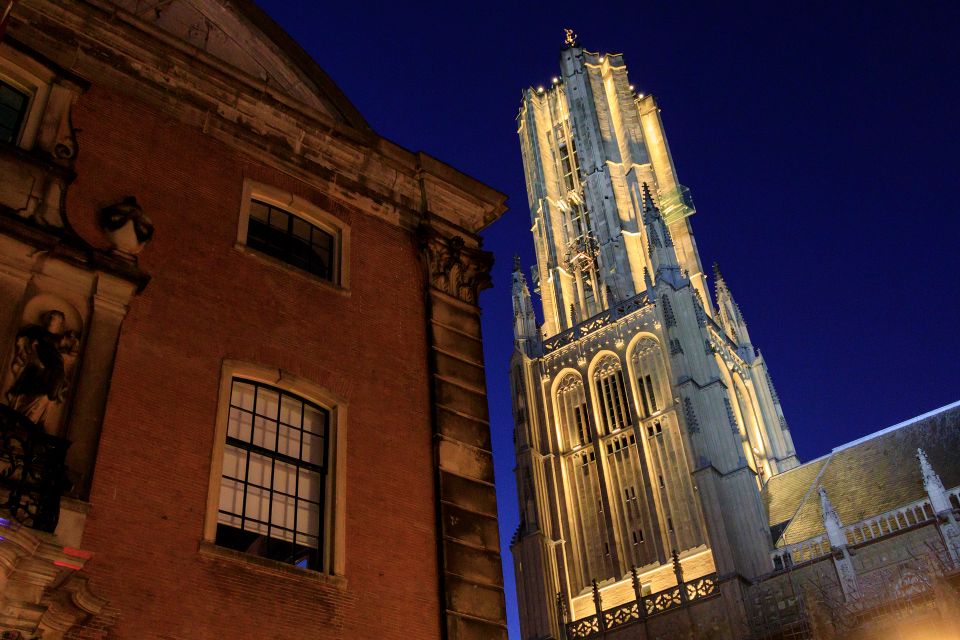
The Eusebius Church, Arnhem’s most famous church, was also right on the front line during the war. During the Battle of Arnhem, on the night of 19–20 September 1944, the church was completely burnt out following shelling. The following year, in 1945, when the Rhine bridge was blown up, to make matters worse, part of the tower also collapsed onto the nave of the church. Everything lay in ruins.
After the war, the people of Arnhem rolled up their sleeves and, in the decades that followed (1947–1964), the Eusebius Church was rebuilt. Following a final major restoration, which took place in recent years, the Eusebius Church
reopened its doors in September 2019.
EXPERIENCE IT FOR YOURSELF! –
In Arnhem, alongside these sites, there are many more places that serve as reminders of the war. Sometimes you’ll see a plaque, but more often than not you’ll simply walk right past them. Follow the Airborne Walking Route
to see all the special sites in Arnhem’s city centre.


